The AI agent orchestration studio · Windows · macOS · Linux
Stop guessing what
your agents are doing.
Conduct them.
Maestro is a desktop IDE for multi-agent AI systems. Compose workflows on a canvas, route every kind of task — text, code, images, video, speech — to the model you choose, and watch every agent work, live, on a map of your system.
● Built in Rust · single core across all three platforms · your keys stay in your OS keychain
One studio, three disciplines
Compose. Route. Observe.
Most agent tools give you a framework and a log file. Maestro gives you an instrument panel.
Route every modality
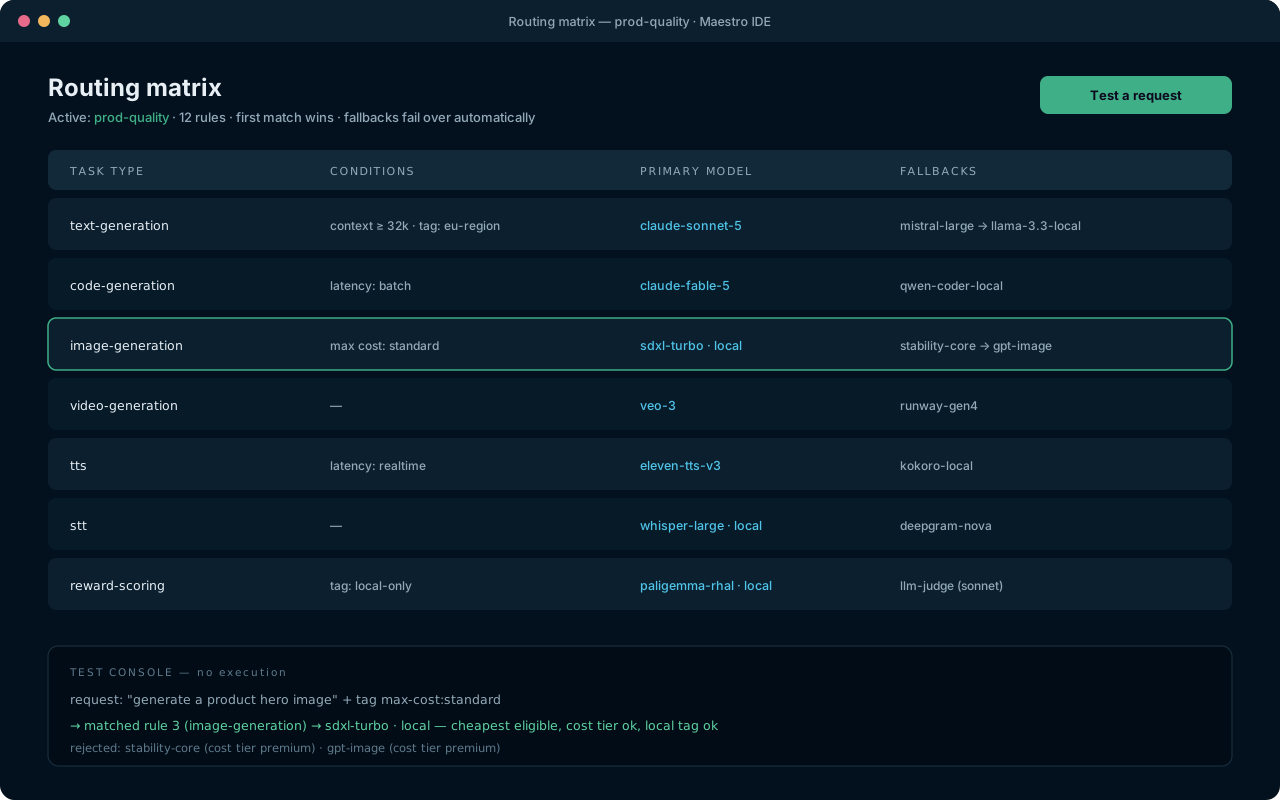
One matrix decides which model handles what: text, code, image generation, video, music, TTS, STT, embeddings. Conditions, cost tiers, and ordered fallbacks — assigning “image generation → your model” is a single dropdown.
See the whole system
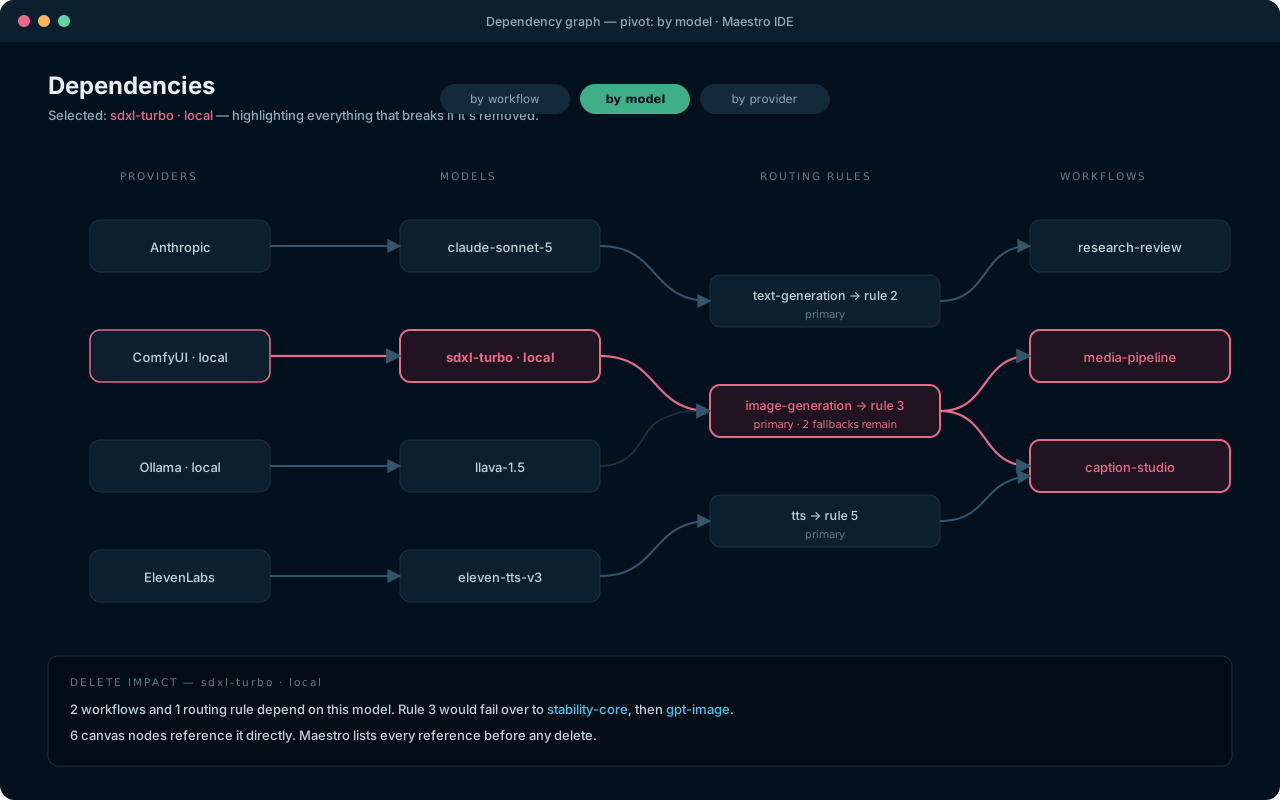
A component tree, a dependency graph, and a live map answer the questions frameworks can’t: what depends on what, what breaks if I remove this model, and where is every agent working right now.
Measure everything
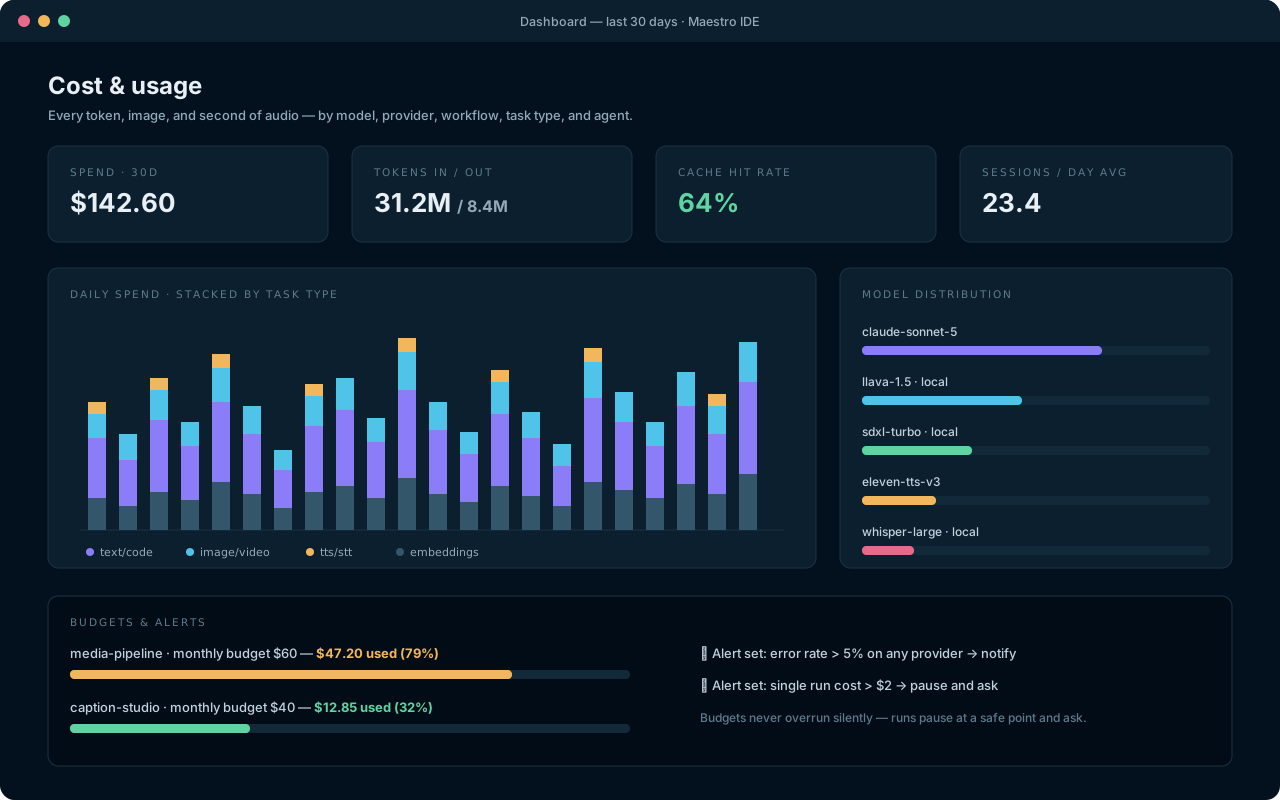
Every prompt, tool call, routing decision, and reward score lands in a replayable event log. Dashboards break spend down by model, provider, workflow, and agent — and budgets pause runs instead of surprising you.
Reward-guided decoding · ICCV 2025
A quality dial on every generation.
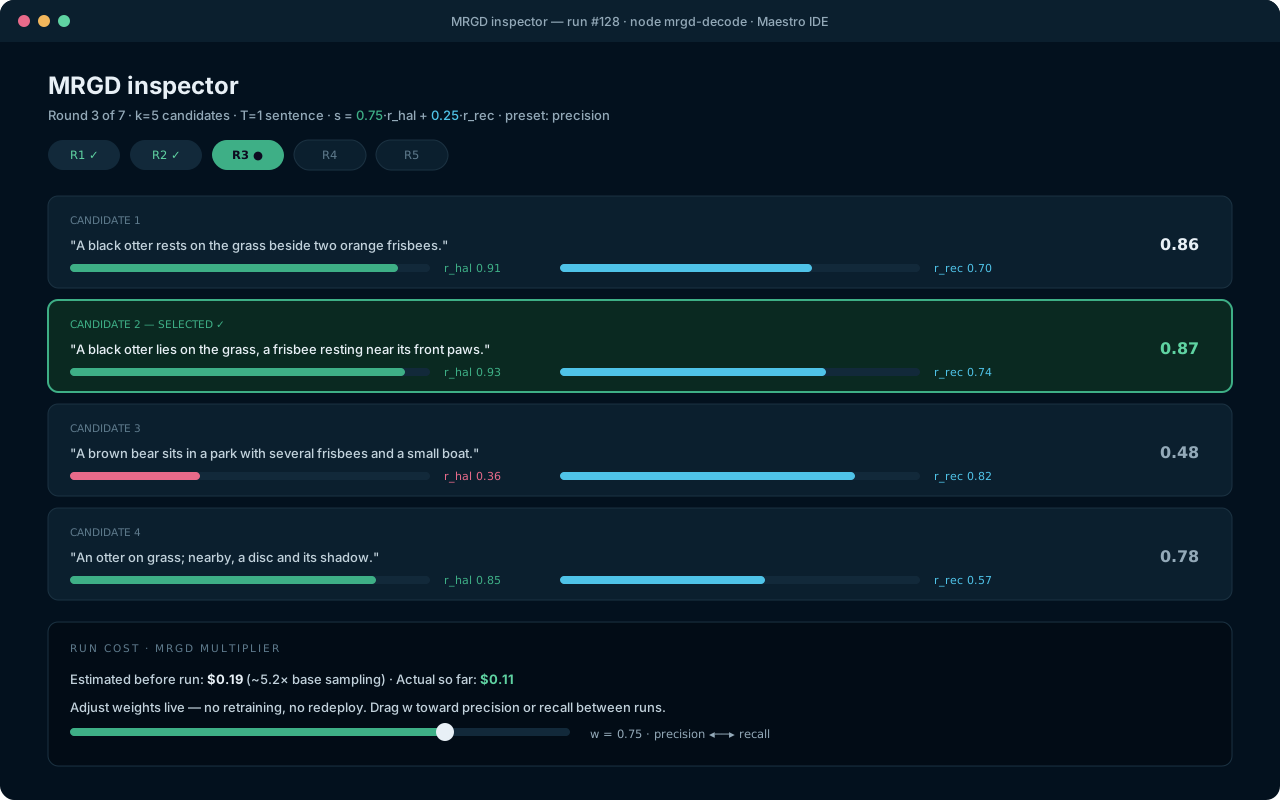
Maestro implements MRGD — multimodal reward-guided decoding. Instead of accepting the first answer, it samples k candidate continuations every sentence, scores each against your reward models, and keeps only the best.
Turn w toward precision or recall at run time — no retraining, no redeploys. Works with learned reward models, programmatic scorers, LLM judges, or your own scripts.
*Results from “Controlling Multimodal LLMs via Reward-guided Decoding”(Mañas et al., ICCV 2025), the paper Maestro’s engine implements.
In development · the agent platform layer
Agents that remember, learn,
and answer you anywhere.
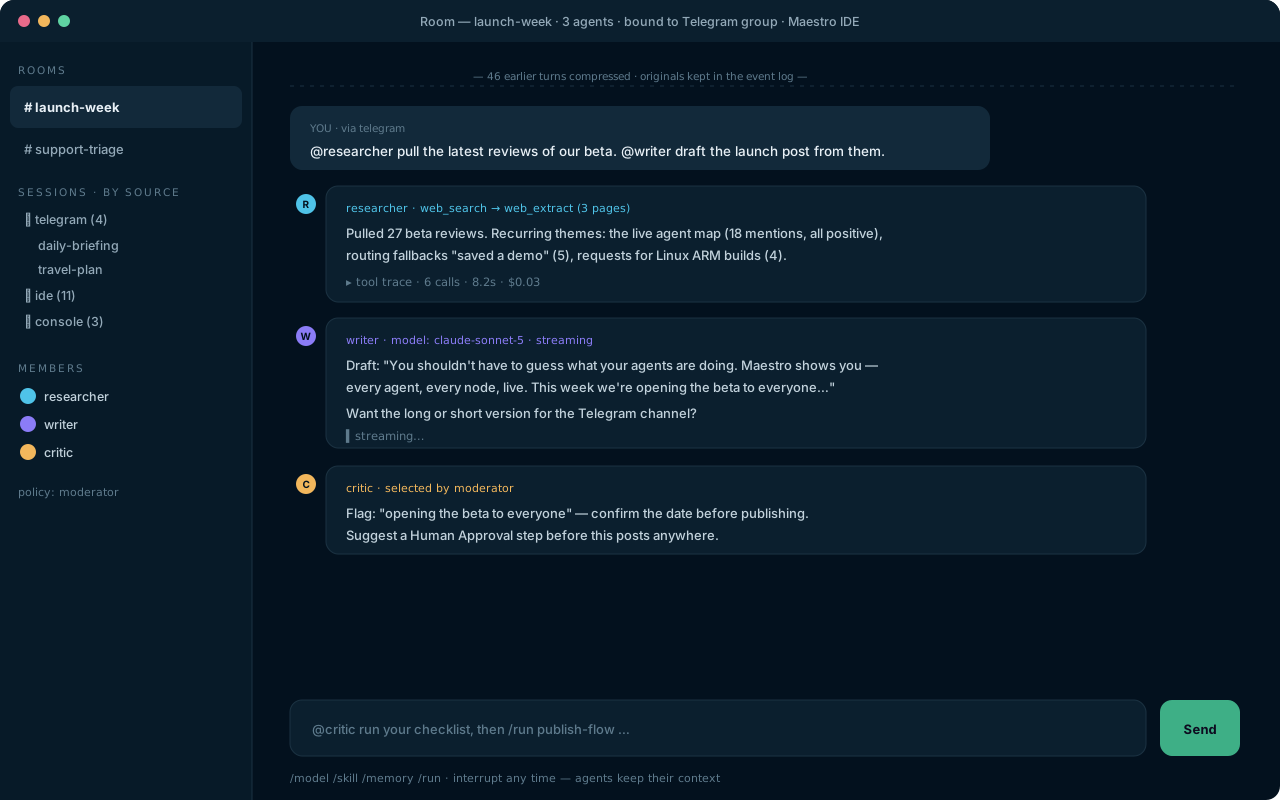
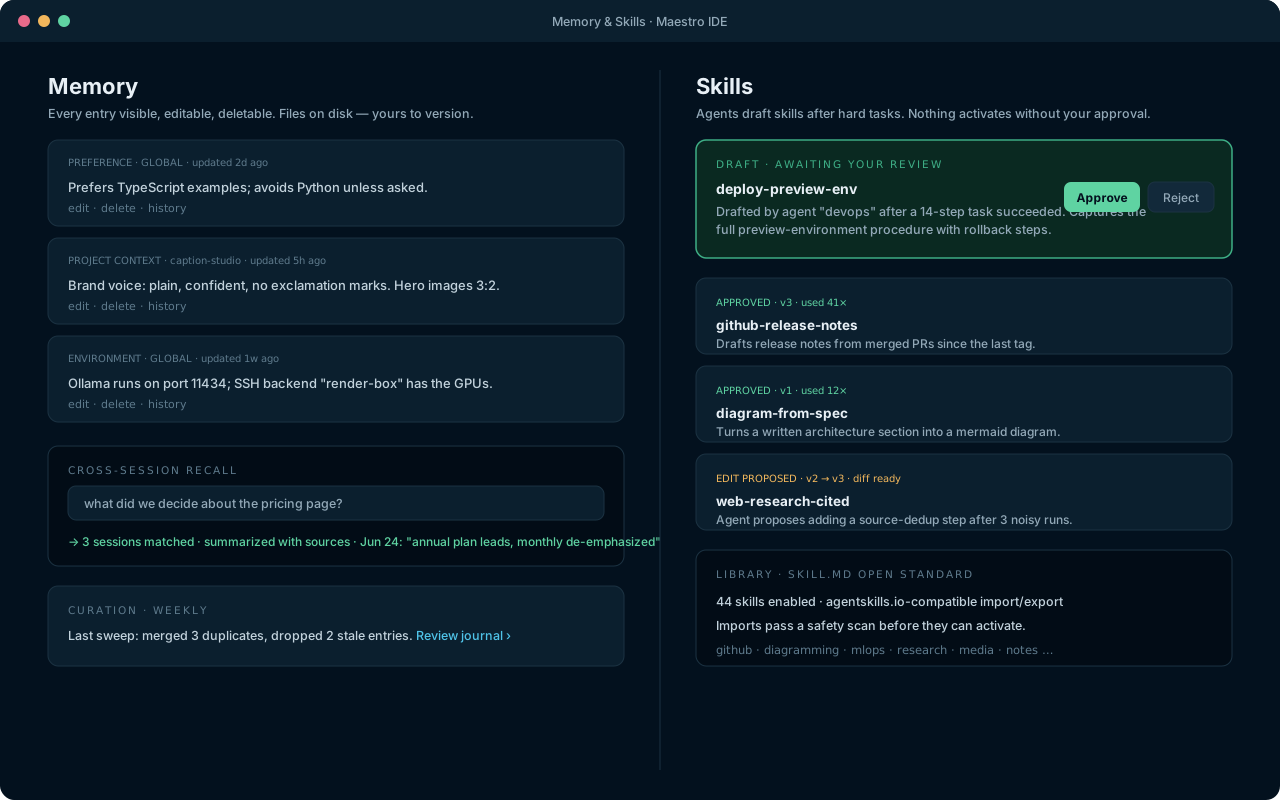
Phase 2 turns Maestro from an IDE into a companion: persistent memory, skills your agents write themselves, multi-agent rooms, and a headless service that keeps working after you close the window.
The full score
Everything in the blueprint.
Every capability, honestly labeled. Available ships in the current preview; In development is specified, staged, and on the roadmap.
Visual workflow canvas Available
Drag agents, model calls, routers, tools, and control flow onto an infinite canvas. Typed ports reject bad connections and a Problems panel validates before you run.
Live agent map Available
Running nodes pulse, edges animate in flow direction, and each agent's colored badge sits exactly where it's working — in the canvas and the component tree.
Unlimited model registry Available
Register any number of models across Anthropic, OpenAI-compatible endpoints, Gemini, Ollama, ElevenLabs, image backends — or any provider via the generic HTTP adapter.
Task routing matrix Available
Rules map task types to a primary model plus ordered fallbacks, with conditions like context size, cost tier, and local-only tags. A test console explains every decision.
Keychain-only secrets Available
API keys go into your OS keychain once and never appear in project files, exports, or logs. Zero telemetry by default.
MRGD decoding engine In development
Reward-guided generation with k candidates, sentence-level scoring, runtime precision/recall weights, presets, and a live candidate inspector.
Media generation routing In development
Image, video, music, TTS, and STT nodes route through the same matrix — plus best-of-k selection over generated media, scored by judges you pick.
Run replay & timeline In development
Every run is an append-only event log: scrub through it step by step, inspect any node's inputs and outputs, and compare two runs side by side on a Gantt timeline.
Budgets & approvals In development
Token, cost, and time budgets pause runs at safe points — never silent overruns. Human-approval nodes gate anything you want to see before it happens.
Persistent memory In development
Agents remember your preferences, projects, and environment across sessions — every entry visible, editable, and stored as plain files you can version.
Self-authored skills In development
After solving a hard problem, an agent drafts a reusable skill in the open SKILL.md format. Drafts wait in a review queue — nothing activates without your approval.
Messaging gateway In development
Talk to your agents from Telegram, Discord, Slack, and more — with pairing-code security, voice memo transcription, and conversations that continue across surfaces.
Schedules & headless service In development
“Every weekday at 8am, summarize my open issues and send it to Telegram.” A background service runs your automations with the IDE closed.
Sandboxed execution backends In development
Agent shell and code tools run where you choose: local, hardened Docker, SSH remotes, or cloud sandboxes — same sandbox policy everywhere.
Browser & web tools In development
Web search, clean page extraction, and full browser automation — navigate, click, type, screenshot — with every action logged and vision analysis in the loop.
Multi-agent rooms In development
Several agents, one conversation. @mention routing, shared context with automatic compression, and one-click conversion of a room into a workflow skeleton.
Profiles & web console In development
Accounts, roles, and isolated profiles on a self-hosted service — plus a browser console for chat, runs, jobs, and dashboards from any machine you allow.
Trajectory export (MLOps) In development
Batch-run workflows over datasets and export tool-call trajectories as ShareGPT or JSONL — curated by outcome, approval, or reward score. Your runs become training data.
MCP integration In development
Attach any Model Context Protocol server and its tools become first-class citizens for agents and canvas nodes, under the same sandbox and approval policies.
Roadmap · built in staged movements
Where the build stands.
Maestro is developed against a public blueprint and a staged specification — each stage ends with working, tested software.
Foundations
Cross-platform shell, project system, model registry with keychain secrets, routing matrix with resolver and test console.
Orchestration IDE (Phase 1 GA)
Full canvas authoring, the orchestrator with event-log replay, the live agent map, the MRGD engine and inspector, media adapters, dashboards, and signed installers.
The service split
One headless service, many surfaces: the IDE attaches as a client, a CLI arrives, chat sessions and persistent memory land.
Learning & automation
Skills with the approval queue, natural-language schedules, and the messaging gateway — Telegram, Discord, and Slack first.
Reach & power
Hardened Docker and SSH execution backends, the backend file browser, web search and browser automation, and MCP.
Collaboration & the data engine (Phase 2 GA)
Multi-agent rooms, accounts and profiles, the remote web console, voice in and out, and trajectory export for fine-tuning.
Take the podium
Your agents are waiting for a conductor.
Follow the build — get an email when a stage ships. No noise in between.